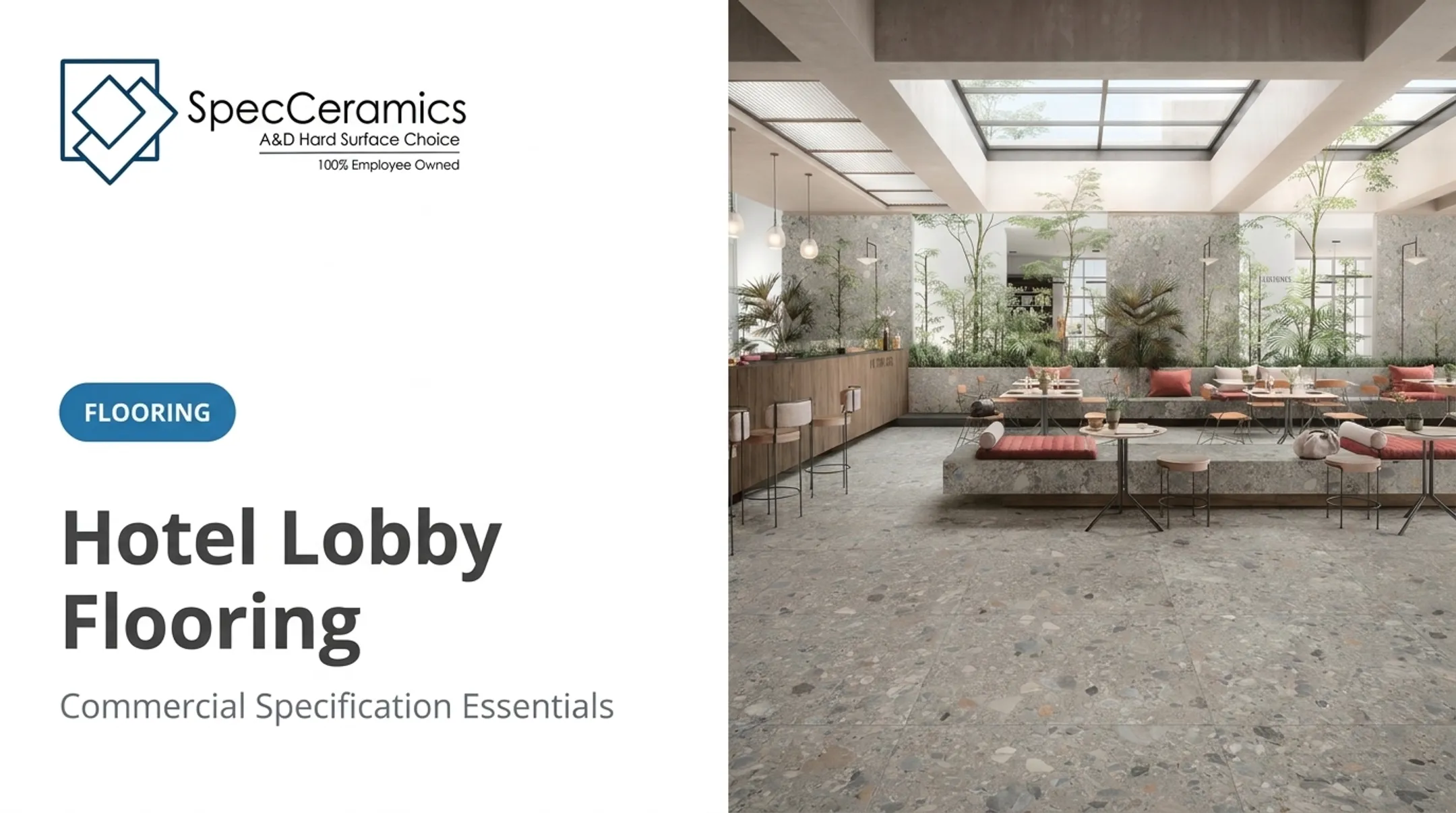
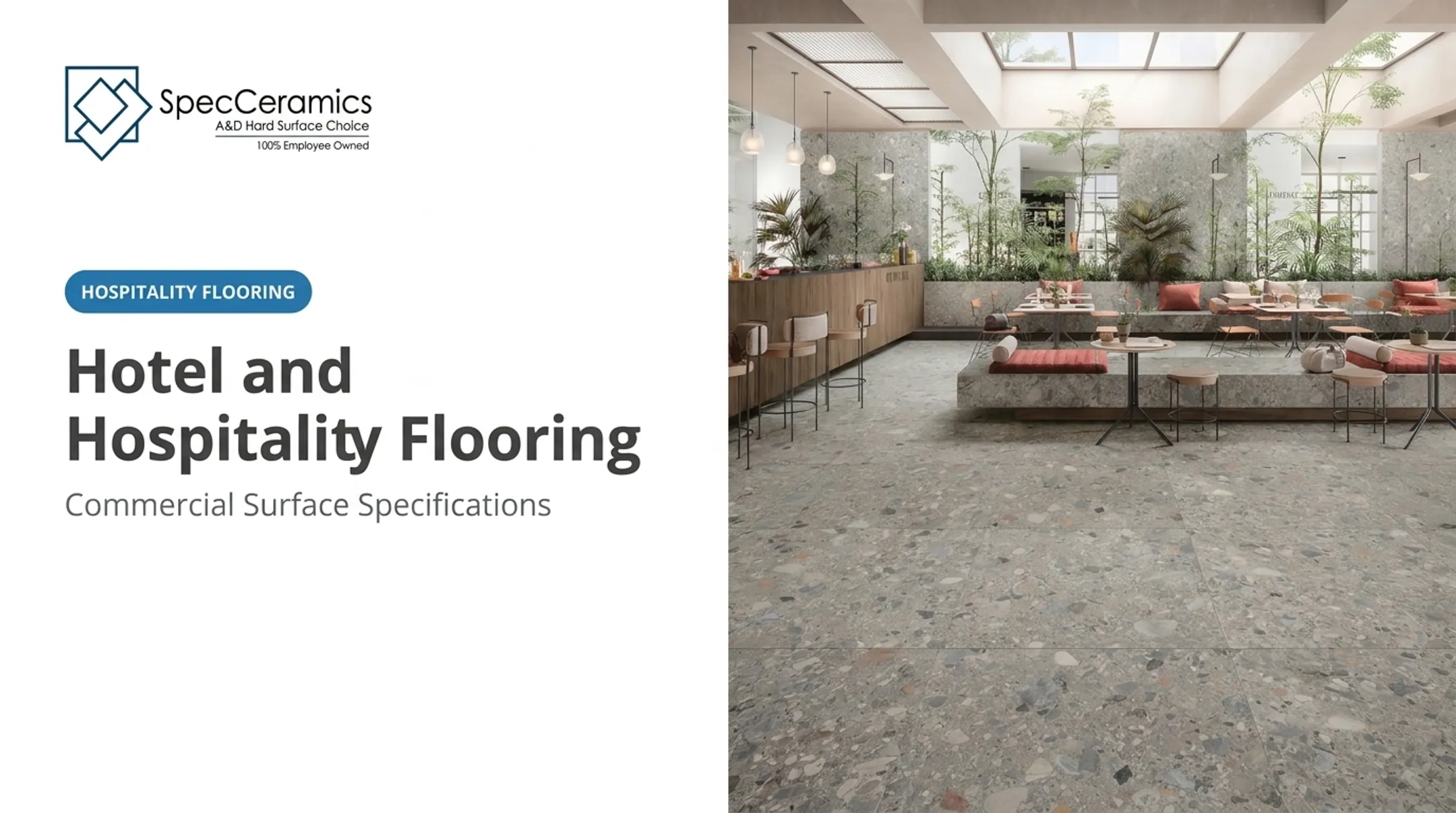
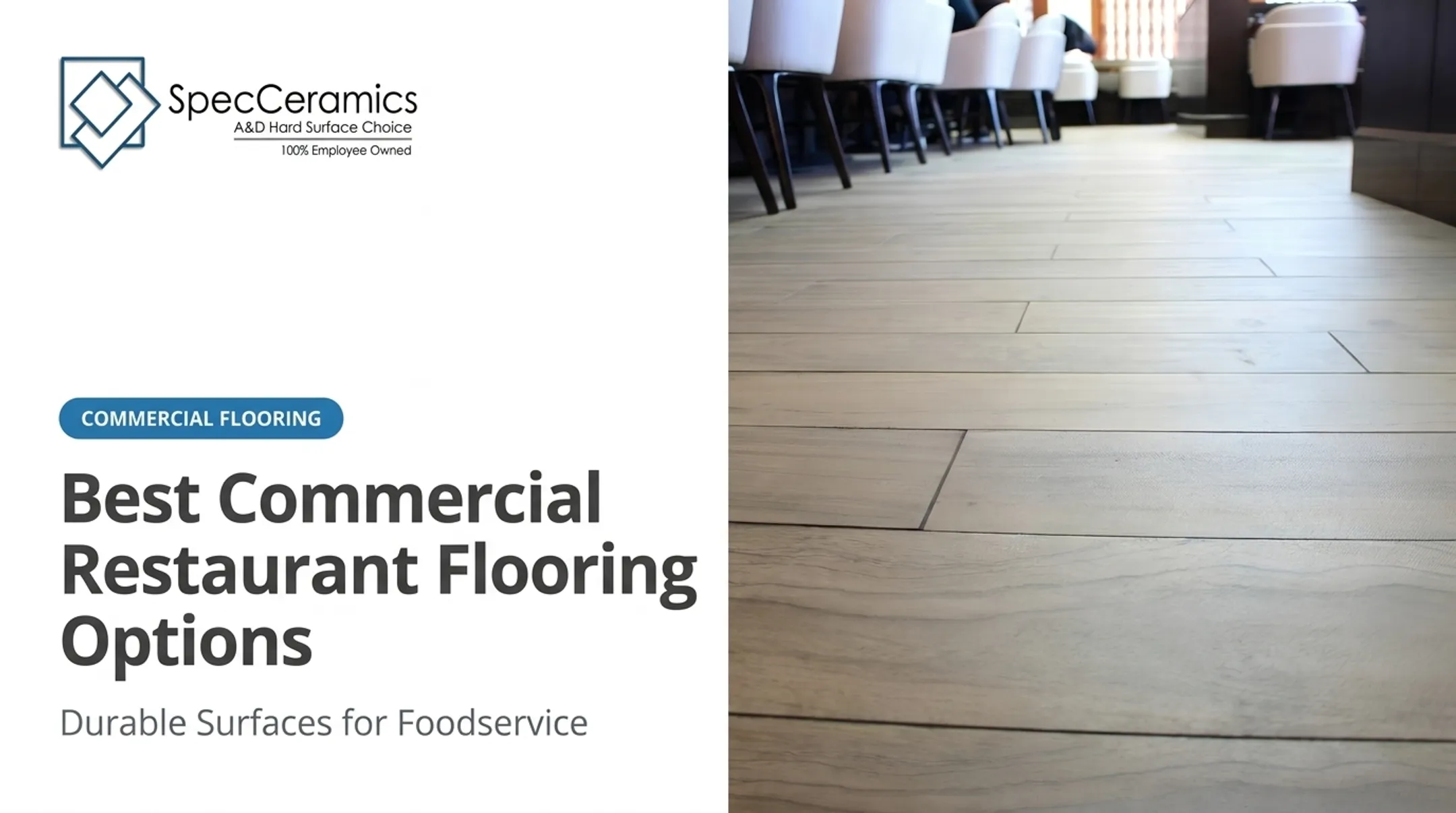
This guide breaks down the best wood and wood-look flooring options for U.S. hotels, comparing durability, maintenance, and ideal placement, so you can match the right product to the right space.
Key Takeaways
- Wood-look porcelain tile: hardwood warmth with stronger water and scratch resistance for lobbies and wet zones.
- Engineered hardwood: real-wood character plus dimensional stability suited to guest rooms.
- Solid hardwood: refinishable, timeless surface—reserve for low-moisture statement spaces.
- LVT: budget-friendly and highly water-resistant for bathrooms and fast renovations.
- Prioritize foot traffic, moisture exposure, and lifecycle cost over upfront looks alone.
Overview of Wood Flooring in the U.S. Hotel Industry
"Wood flooring" in hospitality today spans more than milled planks. It includes solid hardwood, engineered wood, and wood-look alternatives like porcelain tile and luxury vinyl.
Each option falls under a distinct CSI construction spec:
- Engineered wood: 09 64 19
- Solid wood: 09 64 29
- Porcelain tile: 09 30 13
- Vinyl flooring: 09 65 19.23 and 09 65 19.43
Hoteliers increasingly favor hard-surface options over carpet for hygiene and design flexibility. Ceramic and porcelain surfaces are nonporous, so dust, dirt, and pollen can't penetrate them, and they emit no VOCs because they contain no formaldehyde.
LVT sales reached $7.6 billion in 2025, growing 2.7% and capturing roughly 84% of resilient flooring sales, according to Catalina Research data reported by Floor Covering Weekly. That figure covers the total flooring market, not hospitality alone, but it shows how far wood-look resilient products have come.
Hotel rooms and corridors fall into "Heavy Traffic" classification, meaning they face frequent foot traffic and heavy abrasion daily. That reality should drive every flooring decision that follows.
Top Wood Flooring Options for Hotels
Hotel flooring has to handle heavy traffic, moisture, and constant cleaning without losing its look. These five options rank highest on durability, moisture resistance, maintenance ease, design flexibility, and lifecycle cost.
Wood-Look Porcelain Tile
Porcelain tile has been part of SpecCeramics' portfolio since 1986, with collections sourced from manufacturers across Italy, Spain, and the U.S. Wood-look lines replicate hardwood's grain and warmth while delivering porcelain's performance:
- Timber: 8" x 40" glazed porcelain plank in Honey, Nutmeg, and Ebony
- Cocoon: 8x48" planks in Bliss, Joy, Peace, and Glee
- Milestone Mood Wood: Made-in-USA collection built for commercial traffic
The Tile Council of North America defines porcelain as having water absorption of 0.5% or less under ASTM C373. That rating is why it holds up in bathrooms and pool-adjacent zones where wood simply can't compete.
At Lakehouse Hotel San Marcos, gray-brown wood-look plank tile was specified for lounge and circulation areas to deliver a natural wood look with commercial-grade durability.
| Durability | Maintenance | Best Use Areas |
|---|---|---|
| Highly scratch/water resistant, built for heavy foot traffic | Low, no refinishing needed | Lobbies, corridors, bathrooms, wet zones |

Engineered Hardwood Flooring
Engineered wood layers a real hardwood veneer over a plywood core, giving it dimensional stability that solid wood lacks.
The National Wood Flooring Association notes the engineered core holds up against temperature and humidity swings. Its 2023 refinishable program sets minimum wear-layer thresholds (2.5mm factory-finished, 3.2mm unfinished) for products eligible for future sanding.
SpecCeramics' commercial lines illustrate the range:
- Barolo: French Oak with a 4mm sawn wear layer, eight coats of UV-cured urethane, 5-Year Limited Commercial Warranty
- Dependable Oak: 5/8-inch sawn-cut construction, 3-year finish warranty, 10-year structural warranty
- Sea Level: European Oak with hand wire-brushing and a Nu Oil® finish
Not every engineered product is refinishable, so verify wear-layer specs before assuming a floor can be sanded down the line.
| Durability | Maintenance | Best Use Areas |
|---|---|---|
| Stable, resists warping | Sweep/vacuum, occasional spot refinish | Guest rooms, lounges, function halls |
Solid Hardwood Flooring
Solid oak, walnut, or maple planks still deliver the high-end, timeless look many luxury hotels want. They can be sanded and refinished over the years, though there's no universal number of cycles; it depends on wood thickness, prior sanding, and the flooring's profile.
Cost data from a light-to-medium commercial study puts solid wood's initial cost at $8.92 per square foot with a 75-year estimated life, versus $7.92 per square foot for engineered wood with a 25-year lifespan. Solid wood wins long-term durability but demands more upkeep and stays vulnerable to moisture.
| Durability | Maintenance | Best Use Areas |
|---|---|---|
| Long lifespan with periodic refinishing | Higher upkeep, moisture-sensitive | Lobbies, executive suites, fine dining rooms |

Luxury Vinyl Tile (LVT) / Wood-Look Vinyl
LVT replicates wood grain at a fraction of the cost and with far greater moisture tolerance. Favorable Waterproof LVT carries a 20mil wear layer, a Surface Guardian Pro finish, waterproof construction, and a 10-year commercial finish warranty. WoodChic rigid-core collections add a 20mil wear layer with a 20-Year Limited Commercial Warranty.
Both suit commercial settings, with realistic wood graining and longer plank lengths that reduce visible seams.
The biggest operational win: individual planks can be spot-replaced without tearing up the whole floor, a serious advantage for hotels that can't afford extended room closures.
| Durability | Maintenance | Best Use Areas |
|---|---|---|
| Scratch and water resistant | Very low | Guest bathrooms, high-moisture zones, budget renovations |

Parquet and Patterned Wood Flooring
Herringbone and chevron layouts create a distinctive visual identity in boutique lobbies and lounges. Products like Provenza W Circles combine two wood species into an articulated composition for spaces that need a signature look. Engineered formats keep maintenance closer to standard engineered wood while retaining the pattern's upscale appeal.
| Durability | Maintenance | Best Use Areas |
|---|---|---|
| Depends on core construction | Moderate | Lobbies, lounges, boutique suites |
How to Choose the Best Wood Flooring for Your Hotel
The most common mistake? Choosing a floor for how it photographs, then discovering it can't handle a lobby's foot traffic or a bathroom's humidity. Here's what actually matters:
- Foot traffic levels - Lobbies and corridors need heavy-traffic-rated products; guest rooms can tolerate softer engineered or solid wood.
- Moisture exposure - Bathrooms, pool decks, and spa areas call for porcelain or LVT, not wood.
- Slip resistance - The U.S. Access Board requires accessible floors to be stable, firm, and slip resistant. Ask for the manufacturer's DCOF rating and pair it with proper drainage and cleaning protocols.
- Acoustic performance - Request STC and IIC ratings for the full floor-ceiling assembly—not the product alone—to protect guest comfort scores.
- Lifecycle cost vs. renovation cycle - A cheaper floor replaced every five years can cost more than a longer-lasting option.
- Sustainability certifications - FloorScore and GREENGUARD Gold support indoor air quality goals and LEED documentation.

Each of these factors ties directly to a business outcome: fewer renovation cycles, stronger guest satisfaction scores, and easier compliance with green building targets.
Conclusion
There's no single "best" wood flooring for hotels. The right choice depends on matching material performance to the demands of each zone:
- Wet-resistant porcelain for bathrooms
- Stable engineered wood for guest rooms
- Refinishable solid wood for statement spaces
- LVT where budget and speed matter most
Evaluate flooring the way you'd evaluate any capital investment: over its full lifecycle, not just its sticker price. Architects and hoteliers planning a renovation or new build can consult SpecCeramics' showroom and design-library resources to specify wood-look porcelain tile and hardwood collections for their project.
Frequently Asked Questions
What type of wood flooring is best for commercial use?
Engineered hardwood and wood-look porcelain tile are preferred for hospitality settings. Both offer stronger durability and lower maintenance than solid wood in high-traffic commercial environments.
What is the Rule of 3 for flooring?
The Rule of 3 is a design heuristic: use no more than three flooring types or colors in a connected space to keep visual cohesion. It is not a recognized industry or compliance standard.
Is engineered wood as durable as solid hardwood in high-traffic hotel areas?
Engineered wood's factory-applied UV-cured finishes and stable core often outperform solid wood in humidity resistance and consistency. Solid wood can be refinished more times, but engineered wood typically needs less upfront maintenance.
Can wood-look tile really replace real wood in hotel lobbies?
Modern printing on porcelain tile closely replicates wood grain, knots, and texture. It also adds water and scratch resistance real wood can't match, making it a strong lobby alternative.
How often does hotel wood flooring need to be refinished or replaced?
Solid hardwood is often refinished every 7–10 years, depending on wear and remaining thickness. Engineered wood can usually be refinished once or twice based on wear-layer depth; wood-look tile never needs refinishing.
What flooring is best for hotel bathrooms and pool areas?
Wood-look porcelain tile or LVT are the clear choices for wet areas, thanks to low water absorption and scratch resistance. Avoid solid and engineered wood in these zones due to moisture sensitivity.