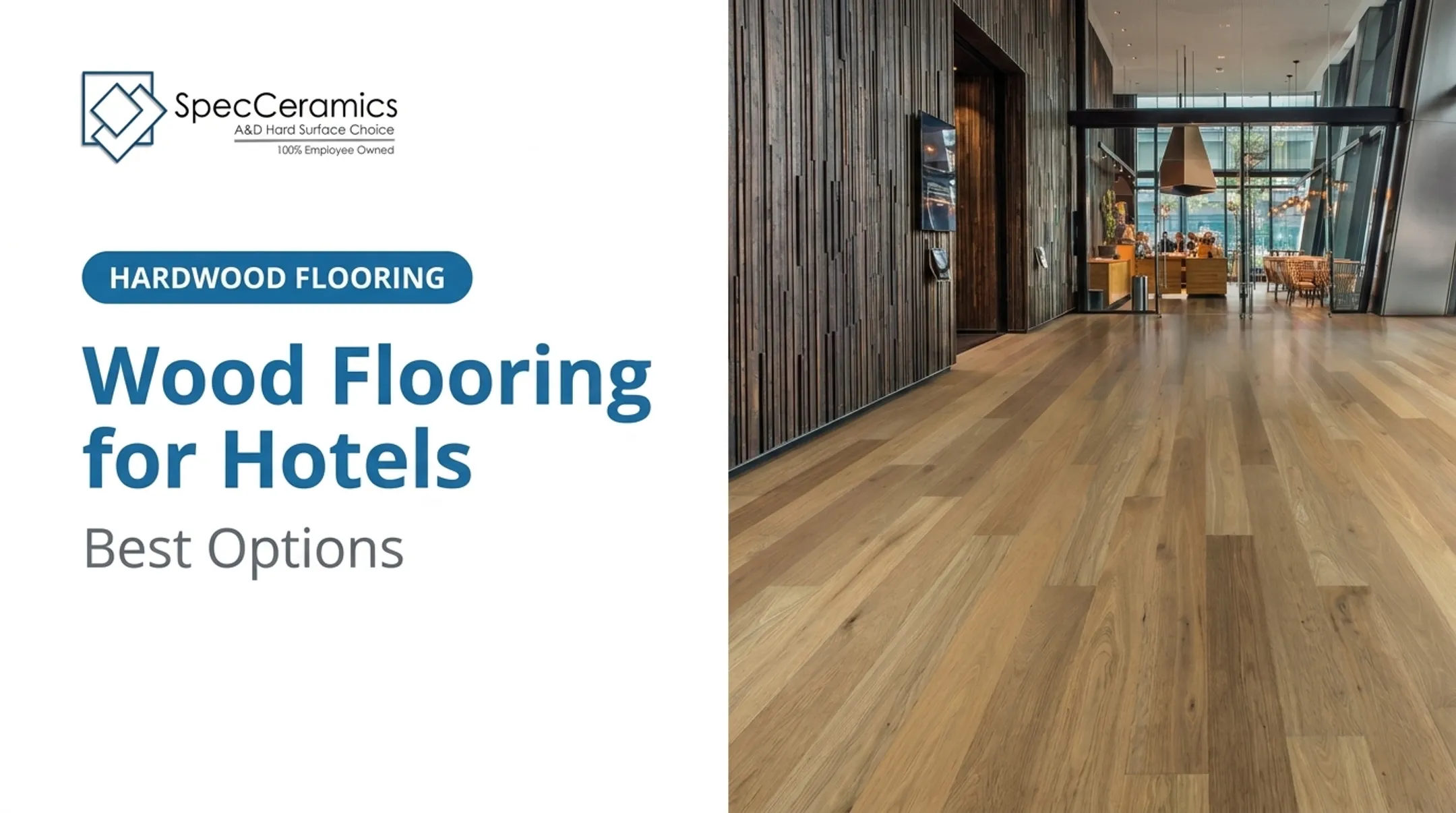
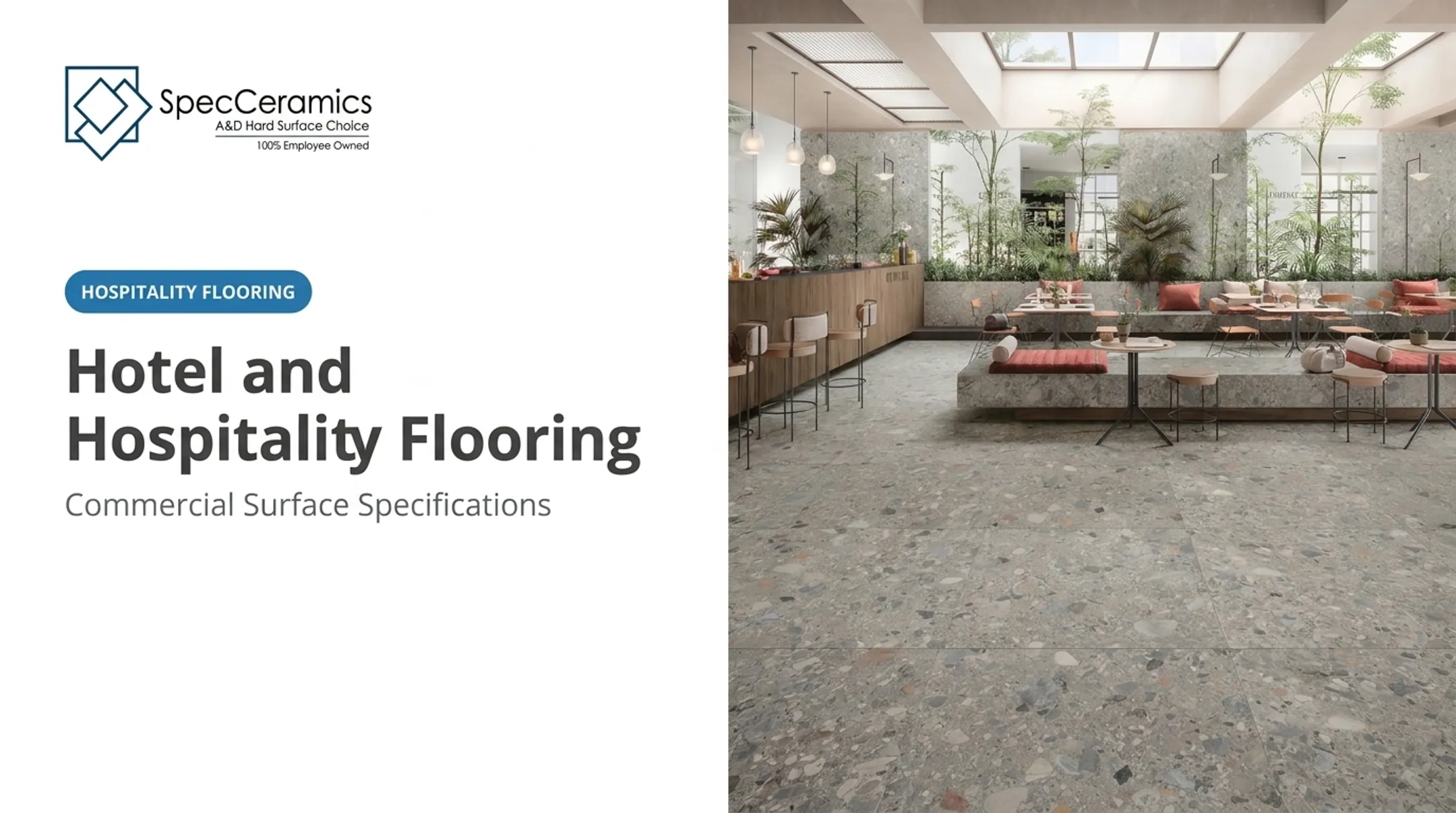
That first impression has to survive a beating. Lobby floors absorb rolling luggage, wet umbrellas, banquet carts, and a constant churn of foot traffic that most commercial spaces never see. Balancing that punishment with design ambition is the real challenge.
This guide covers what to weigh when specifying lobby flooring, the material options that hold up best, current design approaches, and the safety and maintenance details that keep guests upright and floors looking new.
Key Takeaways
- Lobby flooring must handle heavy traffic, moisture, and acoustics without sacrificing design impact
- Porcelain, natural stone, and luxury vinyl lead hospitality specs for durability and design range
- Slip resistance ratings (DCOF) and easy maintenance are non-negotiable in guest-facing areas
- Large-format tile, wood-look finishes, and layout patterns create memorable arrivals
What to Consider When Choosing Hotel Lobby Flooring
Foot Traffic and Durability
Lobbies see disproportionate wear compared to other commercial floors. Rolling suitcases, bell carts, and banquet equipment create abrasion levels far beyond typical foot traffic. Flooring classification systems reflect this. The Extra-Heavy Traffic category specifically lists hotels and areas exposed to the outdoors as needing the highest abrasion resistance available.
Acoustics
Hard surfaces bounce sound. A marble or porcelain lobby with high ceilings can turn check-in chatter into an echo chamber. Tested wood-composite assemblies over concrete slabs have achieved STC 56-59 ratings, well above the ≥50 threshold used for sound isolation.
Practical fixes include:
- Area rugs in seating zones
- Textured or matte finishes instead of high-gloss
- Acoustic underlayment beneath rigid-core or LVT products
Safety and Slip Resistance
Coefficient of friction matters most where rain, snowmelt, or tracked-in water hits the floor first. Per ANSI A326.3:
- Interior dry and standard interior wet: DCOF of at least 0.42
- Wet-plus zones near entrances: often ≥0.50
- Structured or anti-slip surfaces: R9–R11 under European slip-resistance testing
Aesthetic Alignment With Brand
A boutique hotel might lean into bold terrazzo or mosaic accents. A family-friendly property may prioritize warm wood-look tile that feels approachable. Either way, the flooring needs to match the story the brand is telling before a guest even checks in.
Maintenance and Lifecycle Cost
Material choice drives long-term cost more than almost any other lobby decision. A life-cycle cost analysis comparing 18 commercial flooring types found:
| Material | Life-Cycle Cost/sq ft | Useful Life | Annual Cost/sq ft |
|---|---|---|---|
| Porcelain tile | $73.16 | 75 years | $0.98 |
| Carpet tile | $132.57 | 5 years | $1.77 |

Porcelain's near-zero absorption and abrasion resistance translate directly into fewer replacement cycles and lower long-term spend.
Budget and Square Footage
Initial installation costs vary too. That same analysis lists porcelain tile installation (material plus labor) at $11.38 per square foot, versus ceramic at $11.03 and quarry tile at $9.53. Larger lobbies amplify these differences fast, so run the math against your renovation cycle, not just the upfront quote.
Top Flooring Material Options for Hotel Lobbies
Hotel lobbies ask flooring to do two jobs at once: look intentional and survive constant traffic, grit, and spills. These five material families cover the options most often specified—and the trade-offs that matter at the entrance, reception, and lounge.
| Material | Durability signal | Maintenance | Best lobby use |
|---|---|---|---|
| Porcelain / ceramic tile | Impervious (≤0.5% absorption) | Low | Entries, main circulation |
| Natural stone | High when sealed | Higher | Feature floors, reception |
| LVT / LVP | 12–30 mil wear layers | Low–moderate | Large floor plates, renovations |
| Engineered hardwood / hybrid | Wear-layer dependent | Moderate | Lounge zones away from doors |
| Carpet / carpet tile | Shorter replacement cycle | High in wet zones | Adjacent seating, not primary path |

Porcelain and Ceramic Tile
Porcelain is defined by the Tile Council of North America as impervious tile with water absorption at or below 0.5%, tested under ASTM C373. That low porosity resists stains, moisture damage, and bacterial growth in spaces with constant foot traffic and everyday spills.
Collections like Caesar Pillar and Cotto d'Este Limestone show how porcelain now mimics natural stone convincingly, at large formats with tight grout lines for a nearly seamless look.
Natural Stone
Marble, granite, and travertine still signal luxury better than almost anything else. SpecCeramics' natural stone offerings include granite, marble, limestone, terrazzo, and basalt. The trade-off is maintenance. Stone needs more care than tile—especially polished finishes hit by abrasive foot traffic and grit from outside.
Luxury Vinyl Tile/Plank
LVT has become a serious contender for hospitality lobbies. Commercial-grade lines from manufacturers like Karndean publish wear layers between 12 and 30 mil, with warranties often in the 10- to 20-year range. SpecCeramics carries VILLAGE, a PVC-free waterproof LVT collection, plus rigid-core options with 20 mil wear layers and 20-year commercial warranties.
Engineered Hardwood and Hybrid Rigid Core
Wood brings warmth that tile can't fully replicate, but moisture exposure near entrances is a legitimate concern. SpecCeramics' Barolo Collection (French oak, 4mm wear layer) carries a 5-year commercial warranty—shorter than most rigid-core alternatives, which reflects the added maintenance sensitivity of real wood.
Carpet and Carpet Tile
Carpet softens acoustics and adds comfort, but lifecycle math is unforgiving: roughly a 5-year useful life versus decades for porcelain. Staining risk near entrances and food-and-beverage areas makes carpet a harder sell on primary paths. It still earns a place in adjacent lounge seating.
SpecCeramics sources ceramic, terrazzo, stone, LVT, and hardwood collections from manufacturers in Italy, Spain, and the U.S. Showroom and design-library support help architects and designers narrow that range to what fits a specific lobby program.

Lobby Flooring Design Ideas That Make an Impression
Large-format tile and stone-look porcelain create a seamless sweep across open lobby floors. Fewer grout lines mean a calmer, more expansive visual field. SpecCeramics collections like Cocooning, available up to 24" x 48", are built for that continuous look.
Layout choices matter as much as material:
- Diagonal or chevron installations add movement and can subtly define circulation paths
- Contrasting borders separate check-in areas from lounge seating without walls
- Checkerboard or bookmatched marble-look tile creates a classic, high-end focal floor
- Wood-look tile, such as Ergon Woodtouch or St Augustino Primewood, gives warmth without hardwood's moisture sensitivity
Mosaic accents and feature installations near the reception desk create a focal point guests remember. One Casa de Arquitetura hotel lobby project paired large-format Frozen porcelain flooring with a striking mosaic-accented wall. That pairing turns a functional check-in counter into a design statement.

Safety, Slip Resistance, and Maintenance in High-Traffic Lobbies
Manufacturers rate tile slip resistance using dynamic coefficient of friction (DCOF) testing under ANSI A326.3. The standard is clear on one point: DCOF helps compare products, but it doesn't predict whether any individual person will slip. Real-world risk depends on contaminants, shoe wear, slope, and maintenance too.
For entrances exposed to rain or snowmelt, look for:
- Wet DCOF ratings of 0.50 or higher (versus the 0.42 baseline for standard interior wet zones)
- Textured or structured surface finishes rather than high-polish
- Entry mats and proper drainage to reduce standing water before it reaches finished flooring
Those same performance priorities carry into day-to-day care. Nonporous porcelain and ceramic need far less upkeep than carpet or hardwood:
- No sealing or shampooing
- No staining risk from spilled drinks
- Water absorption at or below 0.5%, which limits moisture that bacteria and allergens need

That mix makes porcelain a practical choice for guest-facing common areas where hygiene matters.
Frequently Asked Questions
What is the Rule of 3 for flooring?
It's a design heuristic that limits a space to three primary flooring materials, colors, or textures so the look stays cohesive. Designers treat it as a composition guideline to avoid visual clutter, not as a code or industry standard.
Which flooring is trending now?
Large-format porcelain, stone-look tile, and warm wood-look finishes are showing up frequently in current hospitality projects. Manufacturers are also leaning into mixed-material layouts for zoning and wayfinding.
What type of flooring is best for a hotel lobby?
Porcelain tile and natural stone top most specifications thanks to their durability, design flexibility, and low maintenance needs. Porcelain in particular offers near-zero water absorption, which matters most near entrances.
How much foot traffic can hotel lobby flooring handle?
Commercial-grade porcelain and stone are built for extra-heavy traffic classifications that specifically include hotels. These outperform residential-grade materials, which aren't engineered for constant cart and luggage abrasion.
How do hotels keep lobby floors safe when wet?
Higher wet-DCOF finishes (0.50 or above), textured surfaces, entry mats, and proper drainage design all reduce slip risk near entrances. Hotels rely on that combination; no single measure solves it alone.
How often should hotel lobby flooring be replaced?
Porcelain and stone can last decades with proper care; one life-cycle analysis put porcelain's useful life at 75 years. Carpet, by comparison, often needs replacement every 5 years in high-traffic commercial settings.
Specifying lobby flooring means balancing traffic, moisture, acoustics, brand, and budget at once. SpecCeramics' architectural sales team works with architects and designers across California, Arizona, Nevada, Utah, Colorado, and Hawaii to narrow the right porcelain, stone, or LVT product for each project, backed by showroom consultations and complimentary quotes.