The challenge is that hospitality flooring can't just look good. It has to survive rolling luggage, high heels, spilled drinks, and thousands of footsteps a day, all while meeting slip-safety codes and staying within a renovation budget. And the "right" material changes completely depending on whether you're standing in a lobby, a guest bathroom, or a back-of-house corridor.
This guide breaks down the best flooring options by hotel zone, the factors that actually matter when specifying materials, and how working with a surface partner like SpecCeramics simplifies sourcing for large-scale projects.
Key Takeaways
- Lobbies, guest rooms, bathrooms, and corridors each need different flooring; no single material fits a whole property.
- Porcelain and ceramic tile, natural stone, terrazzo, LVT, and carpet remain the dominant hospitality flooring choices in 2025.
- Specify PEI Class 5 durability and proper DCOF slip ratings to protect guests and control lifecycle costs.
- A specialized architectural surface supplier streamlines sourcing, lot-matching, and multi-zone specification.
Why Flooring Matters in Hotel and Hospitality Design
Flooring isn't just decoration. It's one of the few finishes guests interact with in every single space they enter, from the valet stand to the spa. A scuffed, dated, or slippery floor undercuts brand perception fast, no matter how nice the lobby chandelier looks.
Renovation scope backs this up. When Denver's Oxford Hotel underwent a property-wide renovation, the project touched the lobby, 80 guestrooms, and 10,000 square feet of meeting and event space. New carpet was specified across much of that footprint. Flooring decisions at this scale are rarely a one-room fix.
Flooring deserves early attention in any hospitality design plan for four reasons:
- Longevity: Hard-surface flooring can serve for decades, while carpet and soft goods cycle faster—so the material choice locks in cost and appearance for years.
- Acoustics: Impact noise between floors is measured under standards like ASTM E492; poor sound isolation shows up quickly in guest reviews.
- Safety: Wet-area and high-traffic zones need documented slip resistance, not guesswork.
- Brand consistency: Multi-property groups need flooring specs that read the same from one location to the next, especially across franchised brands.
Guest-facing operators face real pressure to keep facilities in shape. J.D. Power hotel-management benchmarks flag rising operating costs and facilities-maintenance challenges as ongoing industry concerns. Specifying durable materials is one of the clearest ways to ease that load.
Best Flooring Materials for Different Hotel Zones
Lobbies and Public Areas
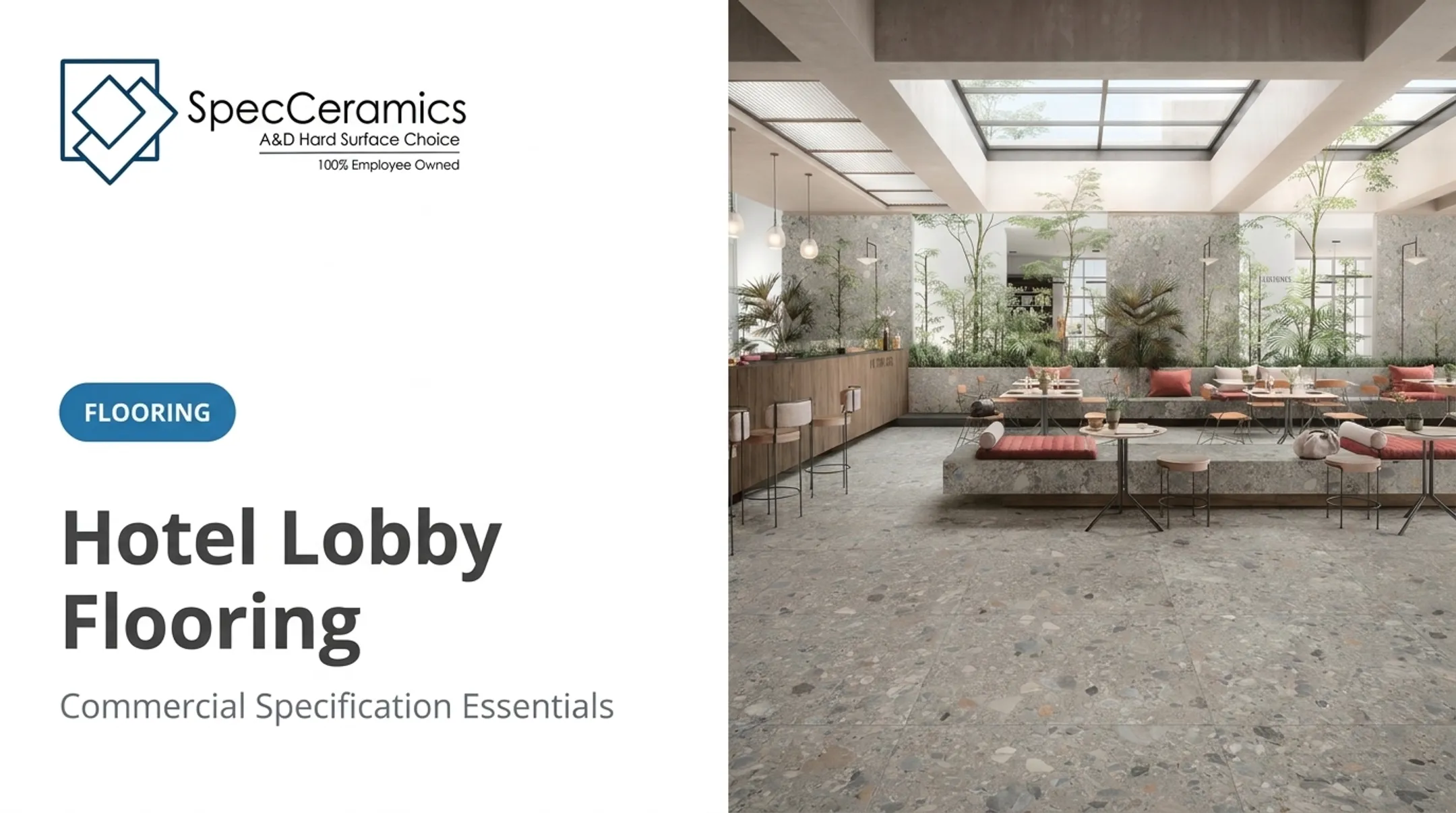
First impressions happen here, so durability and visual impact both matter. Porcelain and ceramic tile, natural stone, and terrazzo are the go-to choices for lobbies because they handle heavy foot traffic without showing wear.
- Porcelain and ceramic tile: PEI Class 5 tile is rated for "abusive, extra-heavy" foot traffic, the load a busy lobby delivers daily.
- Terrazzo: Through-body options like Ariostea Fragmenta deliver a seamless, upscale look in multiple finishes and colors.
- Natural stone: Still a go-to for high-end properties seeking a premium tactile feel underfoot.

Guest Rooms
Comfort takes priority here, but durability can't be ignored. Guest rooms fall into the "heavy traffic" classification alongside corridors and bathrooms, meaning even rooms need wear-resistant materials.
- LVT (luxury vinyl tile): Commercial LVT with a 20-mil wear layer pairs realistic wood visuals with water resistance and sound absorption that helps limit noise transfer between rooms.
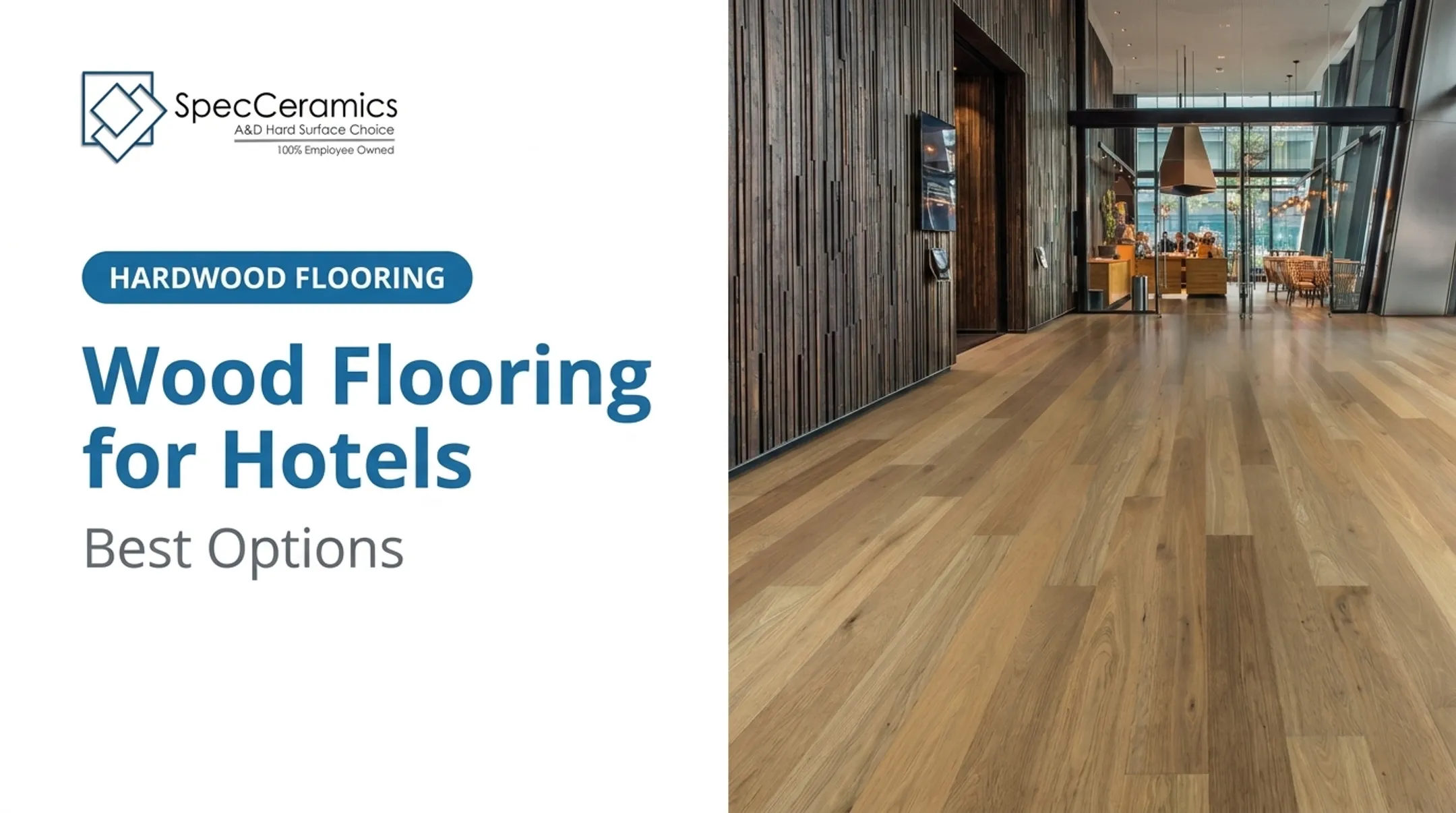
- Engineered hardwood: Collections inspired by weathered barn wood or driftwood bring warmth without the maintenance demands of solid wood.
- Carpet: Remains popular for acoustic comfort, particularly in boutique and luxury guest rooms.
Bathrooms and Wet Areas
Moisture resistance and slip safety drive every choice in wet zones.
- Waterproof porcelain and ceramic tile: Resist standing water and sanitize easily, which is why they remain the bathroom standard.
- Textured wet-zone finishes: Almond-textured or shale-finish surfaces improve traction in bathrooms, spas, and locker rooms where smooth glazes become a liability.

Corridors and Back-of-House
Corridors absorb constant abuse: housekeeping carts, luggage trolleys, and nonstop foot traffic. These spaces need extremely durable, low-maintenance surfaces. Extra-heavy traffic classifications specifically call out hotels, restaurants, and public buildings as environments requiring the toughest wear ratings available.
- PEI Class 5 porcelain tile: Handles cart traffic and continuous footfall with minimal visible wear.
- Commercial-grade LVT: Offers impact resistance and fast clean-up for service corridors and back-of-house routes.
- Quarry or through-body tile: Suited to utility zones where stains, moisture, and heavy rolling loads are routine.
Restaurants, Spas, and Amenity Spaces
Mixed-material approaches work best here, letting designers zone different functions visually.
- Gray geometric hexagonal tile can define a lounge or restaurant wall while a different floor material anchors the dining area.
- Accent rugs layer warmth into spa or lounge seating zones without sacrificing the durability of the base flooring.
- Natural stone or stone-look porcelain often bridges the transition between lobby and restaurant for visual continuity.
Sourcing Ceramic, Porcelain, and Stone Through SpecCeramics
Specifying flooring across five or six different hotel zones is a logistics challenge as much as a design one.
SpecCeramics has specialized in commercial and architectural surface materials since 1986. The company works with hundreds of manufacturers across Italy, Spain, and the United States to supply porcelain, ceramic, terrazzo, and natural stone for hospitality projects.
For architects and developers, that means:
- Showroom and design-library access: Fullerton, CA design library appointments for hands-on material review
- Regional sales support: Coverage across California, Arizona, Nevada, Utah, Colorado, and Hawaii, plus virtual help outside those states
- Quick Ship collections: Fast options for tight renovation timelines, with sample requests and technical data support
Key Factors to Consider When Selecting Hotel Flooring
Foot Traffic and Durability
Match wear ratings to the zone. Extra-heavy traffic ratings belong in lobbies, corridors, restaurants, and other public zones. Heavy traffic classifications fit guest rooms and bathrooms. Specifying below the right threshold invites premature wear and early replacement.
Safety and Slip Resistance
Once durability is set by zone, wet areas still need documented slip performance—not assumptions.
- The DCOF ANSI A326.3 test method measures dynamic coefficient of friction on wet tile using an SBR rubber slider.
- Interior wet-plus applications require a minimum wet DCOF of ≥0.50.
- Porcelain tile itself is defined by water absorption of 0.5% or less under ASTM C373, a baseline for moisture performance in wet zones.
Maintenance and Lifecycle Cost
This is where hard surfaces often outperform soft ones over time. A commercial life-cycle cost analysis covering 18 flooring types found:
| Material | Installed Cost/sq ft | Life-Cycle Cost/sq ft | Useful Life |
|---|---|---|---|
| Ceramic tile | $11.03 | $72.81 | 75 years |
| Porcelain tile | $11.38 | $73.16 | 75 years |
| Engineered wood | $7.92 | $78.76 | 25 years |
| Epoxy terrazzo | $13.66 | $137.22 | 75 years |
| Nylon broadloom carpet | $5.86 | $125.41 | 5 years |
| Carpet tile | $5.25 | $132.57 | 5 years |

Carpet looks cheaper upfront but costs more over a 75-year horizon because it needs replacing roughly every five years, versus about seven decades for tile. Spec on life-cycle cost per square foot—not installed price alone—or early failures show up as guest disruption and repeat labor.
Aesthetics and Brand Alignment
Flooring should reinforce the brand story told everywhere else in the property:
- Budget and select-service: large-format, low-maintenance tile
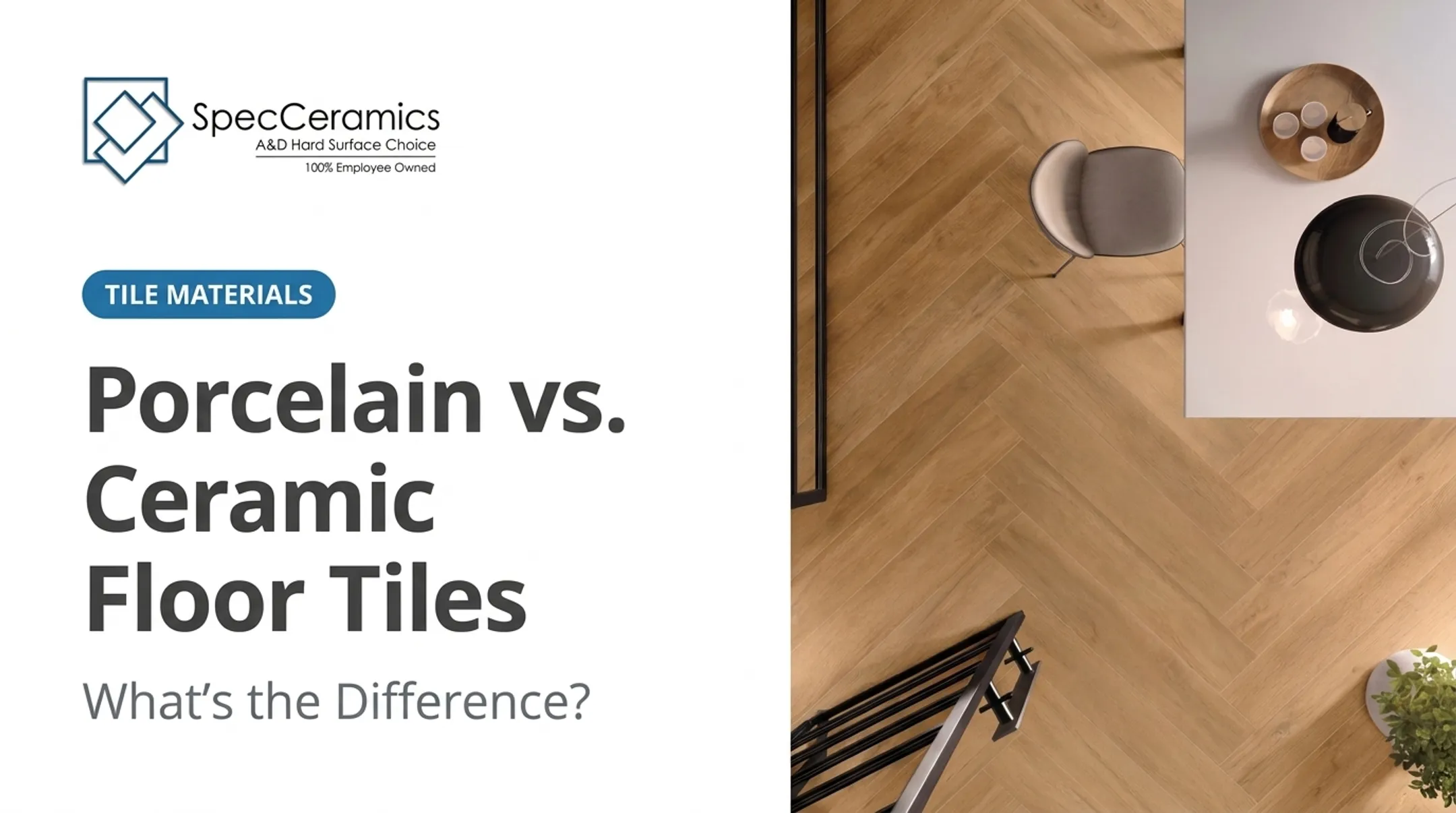
- Boutique and luxury: terrazzo, natural stone, or wood-look porcelain
Choose finishes that signal the stay you sell, not a look that fights the rest of the design.
Acoustics and Comfort
Sound transmission between guest rooms is a top complaint driver. Soft layers help; hard surfaces need the right assembly underneath.
- Underlayment, carpet, and area rugs absorb impact noise
- ASTM E413 (STC) and ASTM E989 (IIC) let designers compare assemblies objectively
Use rated assemblies instead of relying on manufacturer claims alone.
Comparing Popular Hospitality Flooring Types
| Material | Best For | Tradeoff |
|---|---|---|
| Porcelain/ceramic tile | Lobbies, bathrooms, corridors | Hard underfoot, can be cold without heating |
| Natural stone | High-end lobbies, spas | Higher cost, needs sealing |
| Terrazzo | Lobbies, public areas | Higher install cost, extremely long lifespan |
| LVT | Guest rooms, corridors | Not as premium-feeling as real wood or stone |
| Carpet | Guest rooms, select public areas | Shortest lifecycle, higher long-term cost |
Most upscale hotels don't choose a single material across the entire property. They blend tile in wet and high-traffic zones with carpet or LVT in guest rooms, using natural stone or terrazzo as an accent in showcase areas like lobbies.

Emerging formats worth watching:
- Large-format wood-look porcelain planks (up to 12" × 102")
- Textured, non-rectified tile finishes for a handmade look
- Random-mix pattern tiles that break up repetitive layouts
Working with an Architectural Surface Partner for Hospitality Projects
Large hospitality projects rarely fail because of bad material choices in isolation. They fail because of inconsistent lot matching, missed lead times, or a lack of specification support across dozens of rooms and zones.
Working with an experienced supplier addresses this directly:
- Bulk sourcing and consistent lot matching avoid the color and finish variations that plague large orders bought piecemeal
- Specification support connects architects with the right wear-rating and DCOF documentation before installation, not after a complaint
- Project assistance from concept through completion keeps sourcing timelines aligned with construction schedules
SpecCeramics, a 100% employee-owned company operating since 1986, supports architects, designers, developers, and property owners with complimentary quotes and hands-on project assistance. On complex hospitality timelines, that specification experience keeps a sourcing delay in one zone from holding up an entire renovation phase.
Frequently Asked Questions
What is the best type of flooring for hotels?
The best choice depends on the zone. Porcelain tile, natural stone, and LVT are strong options overall because they balance durability and appearance across most hospitality spaces.
What is the best commercial vinyl flooring?
Luxury vinyl tile (LVT) and rigid-core vinyl are favored for hospitality use because of their water resistance, durability, and design versatility, including realistic wood-look visuals.
Where can I buy commercial-grade vinyl flooring?
Specialized commercial flooring suppliers and showrooms are your best bet for quality LVT. SpecCeramics can help connect architects and developers with the right product sourcing for their region, including Quick Ship options.
What flooring is best for hotel bathrooms?
Waterproof porcelain or ceramic tile is the top choice for hotel bathrooms due to moisture resistance and slip safety. Textured finishes are especially recommended for wet zones.
How often should hotel flooring be replaced?
Lifecycle varies significantly by material. Hard surfaces like porcelain tile can last around 75 years, while carpet typically needs replacement every 5 years under heavy commercial use.
Is carpet still used in modern hotel design?
Yes, carpet remains popular in guest rooms and select public areas for the warmth, acoustics, and comfort it provides, even as hard-surface alternatives gain ground in high-traffic zones.