Many homeowners struggle with balancing budget against durability. A kitchen floor needs to survive spills and foot traffic; a formal living room needs to look impressive to buyers. The 2022 NAR/NARI Remodeling Impact Report found new wood flooring projects recover an estimated 118% of their cost at resale, with refinishing existing hardwood recovering 147%, making flooring one of the highest-ROI updates homeowners can make. (NAR/NARI Remodeling Impact Report)
This guide breaks down cost, durability, and the best rooms for each. We'll also touch on wood-look porcelain tile, a third option worth considering.
Key Takeaways
- Hardwood wins on authenticity and resale value, but needs refinishing and fails in wet zones
- LVP stays waterproof, lower-cost, and easier to install—yet it cannot be refinished
- Match the floor to room use, pets, kids, and humidity before locking in a look
- Wood-look porcelain tile bridges the gap for wet rooms and high-traffic spaces
Hardwood vs LVP: Quick Comparison
Side-by-side, the tradeoffs are clear on cost, lifespan, moisture, upkeep, and resale.
| Factor | Hardwood | LVP |
|---|---|---|
| Installed cost | About $8.92/sq ft solid; $7.92/sq ft engineered | About $4.56/sq ft |
| Lifespan | Up to ~75 years; sand and refinish multiple times | About ~15 years for rigid-core; strong wear layer, not refinishable |
| Moisture | Swells, warps, or cups with standing water or humidity swings | Fully waterproof; suited to kitchens, baths, and basements |
| Maintenance | Gentle cleaning only (no steam mops); periodic refinishing | Sweep and damp-mop; no refinishing cycle |
| Resale | Consistently read as a premium upgrade | Moderate appeal; depends on wear-layer quality and brand |
| Install | Typically pro-installed | Click-lock options can cut install time and labor cost |

Use hardwood when longevity and resale matter most. Choose LVP when budget, wet-area performance, and low upkeep drive the spec.
What Is Hardwood Flooring?
Hardwood comes in two main forms:
- Solid hardwood — milled from a single piece of wood such as oak, maple, or walnut, through the full thickness of the board
- Engineered hardwood — a real wood veneer bonded over layered core material, offering better moisture stability
Collections like Sea Level (European White Oak) and Barolo (French Oak) show the natural grain variation that makes hardwood feel authentic; no two boards look identical. Engineered options such as Sea Level's MG4 line include three guaranteed sandings in the product spec, which extends the floor's usable life.

The tradeoff: hardwood is sensitive to humidity swings and carries a higher upfront cost than most other flooring types.
Use Cases of Hardwood
Hardwood performs best in:
- Living rooms, dining rooms, and bedrooms away from moisture sources
- Homes where owners plan long-term ownership
- Resale-focused renovations, given its documented 118-147% cost recovery at sale, per a 2022 NAR/NARI remodeling report
A December 2024 NAR article on wood floors notes that buyer preference for wood floors continues to grow, reinforcing hardwood's staying power in main living areas.
What Is LVP Flooring?
LVP is a multi-layer synthetic floor built for performance. It typically combines a rigid vinyl core (often reinforced with stone aggregate), a printed wood-look layer, and a protective wear layer on top.
Common construction traits include:
- Rigid cores, often reinforced with stone aggregate, for added stability
- Floating click-lock installation, frequently over a pre-attached foam pad
- Wear layers around 20 mil on quality residential products, on the thicker end for home use

The limitation: LVP can't be sanded or refinished. Once the wear layer is scratched through, replacement is the only fix.
Where LVP Works Best
LVP holds up well in rooms where water and wear are constant threats:
- Kitchens, bathrooms, basements, and laundry rooms
- Entryways and mudrooms with heavy foot traffic
- Homes with pets, kids, or rental properties where durability trumps refinishability
According to Floor Covering News (2025), residential resilient flooring—the category that includes LVP—reached $6.099 billion in 2024 sales, with volume up nearly 38% since 2019.
Hardwood vs LVP: Which Is Better for Your Home?
There's no universal winner. The right choice depends on:
- Room location and moisture exposure — wet zones favor waterproof materials
- Budget — LVP frees up cash for other renovation priorities
- Household lifestyle — pets and kids increase wear and spill risk
- Long-term plans — resale-focused homeowners often lean hardwood
Choose hardwood for:
- Main living spaces, formal dining rooms, and primary bedrooms
- Resale-focused projects in moisture-controlled areas
Choose LVP for:
- Basements, kitchens, and bathrooms
- Busy households where waterproofing and easy cleanup matter more than refinishability

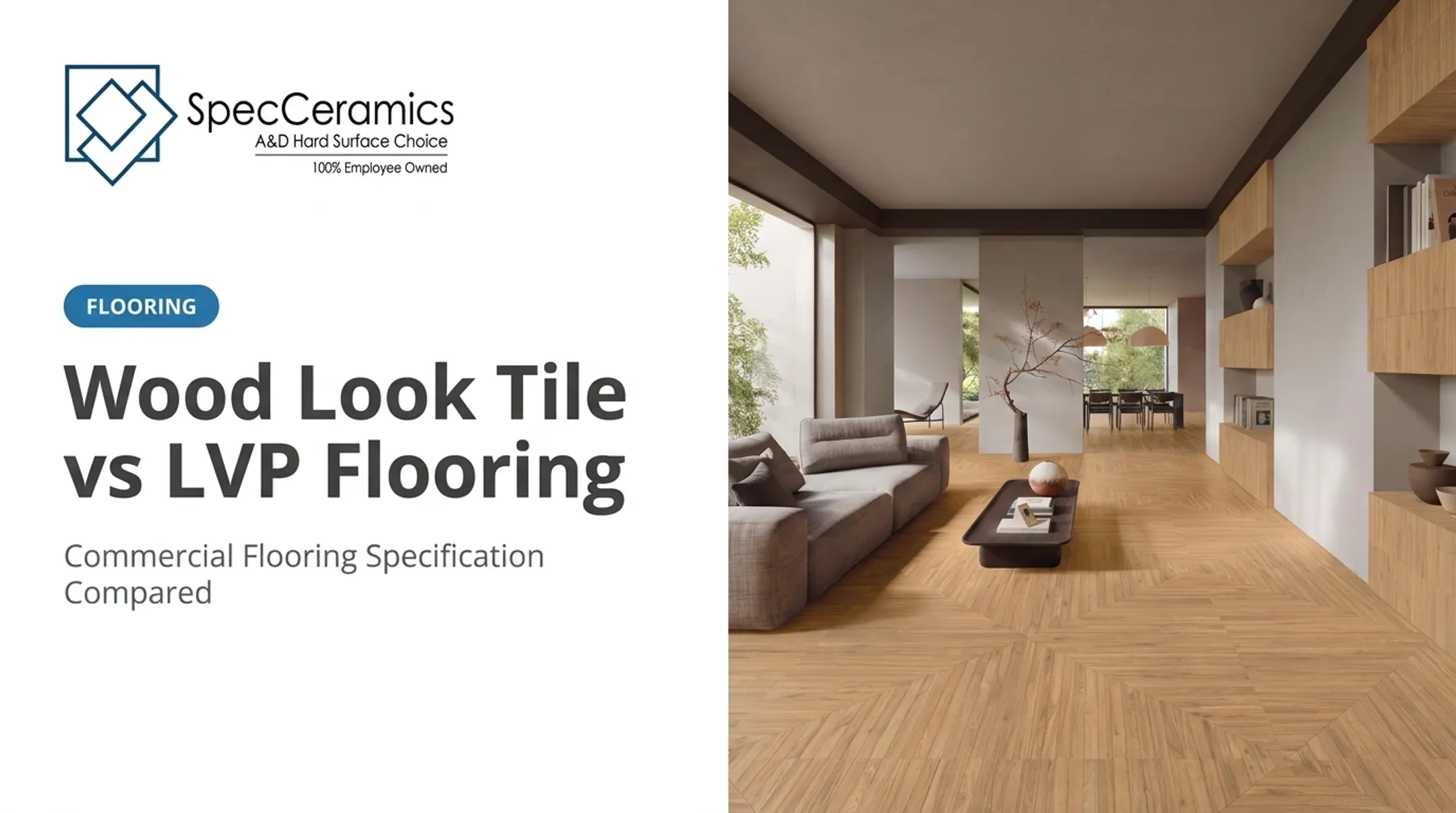
A third option is wood-look porcelain tile. Collections such as SpecCeramics' Native, Enchant, and Caesar Nature replicate hardwood's grain and warmth, with water absorption below 0.5% and higher scratch resistance than hardwood or LVP.
Homeowners comparing all three can work with SpecCeramics' residential sales team to match hardwood, LVP, or wood-look tile to each room's needs.
Cost Breakdown: What Homeowners Actually Spend
| Material | Installed Cost (per sq. ft.) | Estimated Lifespan |
|---|---|---|
| Solid hardwood | ~$8.92 | ~75 years |
| Engineered hardwood | ~$7.92 | Varies by wear layer |
| LVP / rigid-core | ~$4.56 | ~15 years |
Figures based on a commercial flooring cost study using 2020 baseline values to avoid pandemic-related pricing distortion.
What drives your actual total:
- Subfloor prep — uneven or damaged subfloors add cost regardless of material
- Installation method — nail-down hardwood typically costs more in labor than floating click-lock LVP
- Room size — larger rooms benefit more from per-square-foot savings on LVP

Many homeowners put LVP in secondary spaces like basements or laundry rooms, then apply the savings to hardwood in main living areas.
Frequently Asked Questions
How much more expensive is hardwood than LVP?
Hardwood typically runs $3-4 more per square foot installed than LVP. Solid wood averages around $8.92/sq. ft. versus roughly $4.56/sq. ft. for LVP, based on flooring cost studies.
How much does it cost to install 2,000 sq ft of luxury vinyl plank (LVP)?
At roughly $4.56 per square foot, a 2,000 sq. ft. LVP installation lands around $9,120, though pricing varies by wear-layer thickness and subfloor condition.
Which is better: luxury vinyl plank (LVP) or hardwood flooring?
Hardwood fits main living areas and stronger resale goals; LVP fits wet rooms, high-traffic zones, and tighter budgets. Match the material to the room’s moisture load, traffic, and how long you plan to stay.
Should I replace my hardwood floors with luxury vinyl plank (LVP)?
It depends on your existing floor's condition, moisture exposure, and resale priorities. Damaged hardwood in a moisture-prone room may be a good LVP candidate; healthy hardwood in a main living space usually isn't.
What flooring adds the most value to a home?
Hardwood generally adds the most resale value, with NAR/NARI data showing 118-147% cost recovery on wood flooring projects. Quality wood-look porcelain tile can also appeal strongly to buyers.
What is the healthiest flooring for homes?
Porcelain tile and hardwood are generally low-VOC and allergen-resistant options. Many LVP products now carry FloorScore certification, which tests for 35 individual VOCs.
Conclusion
Neither hardwood nor LVP is the "correct" answer for every room. Each material wins in different ways:
- Hardwood — authenticity, refinishability, and strong resale value
- LVP — waterproofing, affordability, and low maintenance
Match the material to the room, budget, and household—not a single “best” floor for every space.
If you want a wood look with different performance tradeoffs, SpecCeramics can help you compare hardwood, LVP, and wood-look porcelain tile for your project.